
Oktibbeha County Arrest Records and Court Charges
An Oktibbeha County arrest record is the record of the arrest itself. It shows who was taken into custody, the agency that made the arrest, the booking, and the early accusations the officer listed. The Sheriff's Office, Starkville Police, Mississippi State University Police, and the Mississippi Highway Patrol all make arrests in the county. An arrest by itself is not a charge. Once a person is booked, a prosecutor reviews the case and decides which formal charges to file with the court clerk. Those filed charges become the court charge record, and that record is what follows the case through every hearing.
The two records are easy to mix up. The arrest and booking side lives with the jail, and the current custody list sits on the sheriff's roster, so the booking detail belongs to the Oktibbeha County inmate records and jail roster. The court charges after arrest are tracked through the court file by case number. Each charge has a code, a severity level, and a status that can shift as the case moves. The full case file, with pleas and the final outcome, sits one step further along in the criminal court record. VINELink, the statewide custody notification service, ties back to the arrest side and lets people track a release.
The Sheriff's Office links VINELink from each roster entry so families can follow a status change, as shown on the VINELink notification system.
VINELink covers the custody side of an arrest, not the charge record, so use it to track whether someone is still held while the court file tracks what the prosecutor filed against them.
How to Find Oktibbeha County Arrest Records and Charges
Charges filed in Circuit Court are searched through the county-linked Delta Computer Systems criminal portal, which covers cases from 1997 to the present. The search screen is free to view, but full case detail requires a paid account at $30 per month or $330 per year. Arrest and booking detail does not show up there. That detail lives on the sheriff's inmate roster instead, so a complete picture often means checking both the court charge index and the jail roster.
- Open the Delta criminal court case search for Oktibbeha County Circuit Court.
- Search by defendant name in last, first format, or by case number if you have it.
- Open the case to read the charge list, the filing date, and the styled parties.
- Check each charge for its statute code, its severity level, and its current status.
Lower-level charges may not appear in the circuit portal at all. Misdemeanor, traffic, and preliminary matters are held by the Justice Court Clerk at 104 Felix Long Drive and by Starkville Municipal Court inside City Hall. For records no portal covers, the county public records request form is the fallback, and the Circuit Clerk counter at 108 W Main can confirm what the office holds.
Who Files Oktibbeha County Charges After Arrest
The prosecutor, not the arresting officer, decides the formal charges. Felonies in Oktibbeha County are prosecuted by the 16th District Attorney, Scott Colom, whose office also covers Lowndes, Clay, and Noxubee Counties. The District Attorney reviews the arrest, weighs the evidence, and presents serious cases to a grand jury. The 16th District Attorney's office sits at 108 W. Main St. in Starkville and handles victim services, bad-check matters, and pretrial diversion alongside felony prosecution.
Lower-level cases run through a different prosecutor. The County Prosecutor, Haley Brown, represents the county in Justice Court and also appears in Drug Court and Youth Court. Charges that start in Starkville Municipal Court are handled by the city's prosecutor for offenses that happen inside city limits. Because the prosecutor controls the charge, the count an officer wrote at booking can look different once the formal charges are filed. A single arrest can produce more charges, fewer charges, or charges at a different level than the booking sheet first showed.
Charge outcomes can also bend before trial. The District Attorney has expanded pretrial diversion for first-time nonviolent offenders, with rehabilitation, counseling, and job help built in, as the office's program notes on the District Attorney Scott Colom page describe. A defendant who completes diversion may see charges dismissed, which is why a charge record and its final status must be read together.
How Oktibbeha County Charges Get Filed: Complaint, Information, and Indictment
The arrest happens first, at booking. The charge record begins later, when the prosecutor files a charging document with the court. That document is the formal paper that names the offense and starts the case. Mississippi uses three main forms, and which one applies depends on how serious the offense is and which court hears it. Misdemeanors usually begin with a sworn complaint or affidavit in Justice Court or Municipal Court. Serious felonies in Circuit Court generally require a grand jury, which meets twice a year in Oktibbeha County unless recalled by special order.
| Complaint | Information | Indictment | |
|---|---|---|---|
| Filed By | Officer / Prosecutor | Prosecutor | Grand Jury |
| Common For | Misdemeanors | Some felonies | Serious felonies |
| Court Level | Justice / Municipal | Circuit Court | Circuit Court |
| Starts | The case | The case | The case |
The charging document is the dividing line between an arrest and a charge. Until it is filed, a person may be booked but not formally charged. Once it is filed, the offense, its statute, and its level all enter the court record and can be tracked by case number through the rest of the case.
Charge Status in Oktibbeha County Court Records
A charge is not fixed once it is filed. As a case moves, charges can be amended, reduced, added, dropped, or dismissed. The status field in the court record tells you where each count stands right now. Reading the status matters as much as reading the charge, because a filed charge and a resolved charge mean very different things. A prosecutor can also decline to go forward on a count through a nolle prosequi, which ends that charge without a verdict.
| Status | What It Means |
|---|---|
| Pending | The charge is filed and active, with the case still moving through court. |
| Amended / Reduced | The charge was changed, often to a lower level, before resolution. |
| Dismissed | The court dropped the charge, sometimes after diversion or a plea on another count. |
| Nolle Prosequi | The prosecutor chose not to proceed on the charge, ending it without trial. |
Note: A charge that shows as dismissed or nolle prosequi may still appear in the public record even though the case did not end in a conviction.
Charges vs. Convictions
Being charged is not the same as being convicted. A charge is an accusation that the state must still prove. A conviction is a finding of guilt by plea or verdict. Many charges in the court record never become convictions, because they are reduced, dismissed, or resolved through diversion. Treating a filed charge as proof of guilt is a common and costly mistake when reading a record.
| Charge | Conviction | |
|---|---|---|
| Stage | Accusation | Verdict or plea |
| Burden of Proof | Probable cause | Beyond a reasonable doubt |
| Decided By | Prosecutor | Judge or jury |
| Public Record | Yes | Yes |
The full path from a filed charge to a plea, a verdict, and a sentence is laid out in the Oktibbeha County criminal court records, where the disposition for each count is recorded.
Sealed vs. Expunged Records
Some charge records are removed from public view by court order. A sealed record is hidden from ordinary searches but still exists for limited official use. An expunged record is treated as if it never happened, and Mississippi law can restore a person to the status they held before the arrest or conviction. Expungement runs through the court that handled the case, under Miss. Code Ann. Section 99-19-71, and the petitioner usually needs the case number, the charge, and proof that the case is complete.
| Sealed | Expunged | |
|---|---|---|
| Visibility | Hidden from public | Destroyed or treated as never existed |
| Law Enforcement | Limited access | Very limited access |
| Eligibility | Set by court order and statute | Some misdemeanors and limited felonies; violent crimes, some DUI, and sex offenses excluded |
Note: After an order is granted, the public online index may not clear right away, so obtain a certified disposition from the clerk to confirm the record's status.
Oktibbeha County Charge Codes and Severity
Each charge points to a specific Mississippi statute, and that statute fixes the offense level. Felonies are the most serious and are prosecuted in Circuit Court. Misdemeanors are lower-level offenses handled in Justice Court or Municipal Court. The same arrest can produce several separate charges, each with its own code and level, and each tracked on its own line in the court record. The statute code is what lets a reader tell a felony count from a misdemeanor count even when the plain-language label looks similar.
State charges are not the only kind. Some offenses are prosecuted in federal court, and Oktibbeha County falls in the Northern District of Mississippi, in the Aberdeen Division. Federal charges follow a separate filing and docket system that county clerks cannot reach. The federal district's Northern District case information page explains how PACER and CM/ECF hold those charge records.
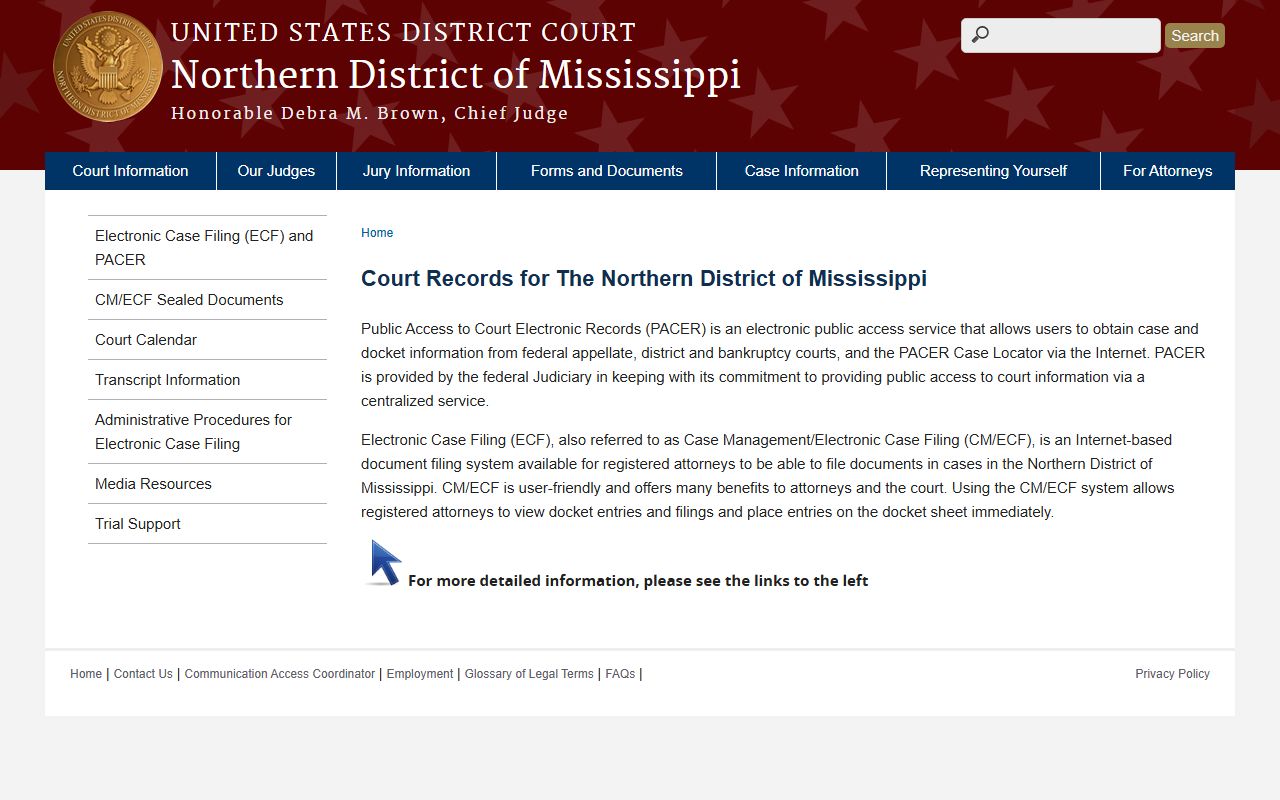
Because federal charges sit in PACER rather than the county or Delta index, a person facing federal counts will not show up in the Circuit Court charge search at all.
Statewide Charge and Criminal History Lookups
Charges in one county roll up into a person's statewide criminal history. For people sentenced to state custody, the Mississippi Department of Corrections runs an inmate search by name or MDOC ID. That tool covers sentenced inmates moved into state custody, not every county arrestee, so it works best once a charge has reached a conviction and sentence. The MDOC records and victim services teams handle deeper history requests, and the MDOC contact page lists the right office for each kind of request.
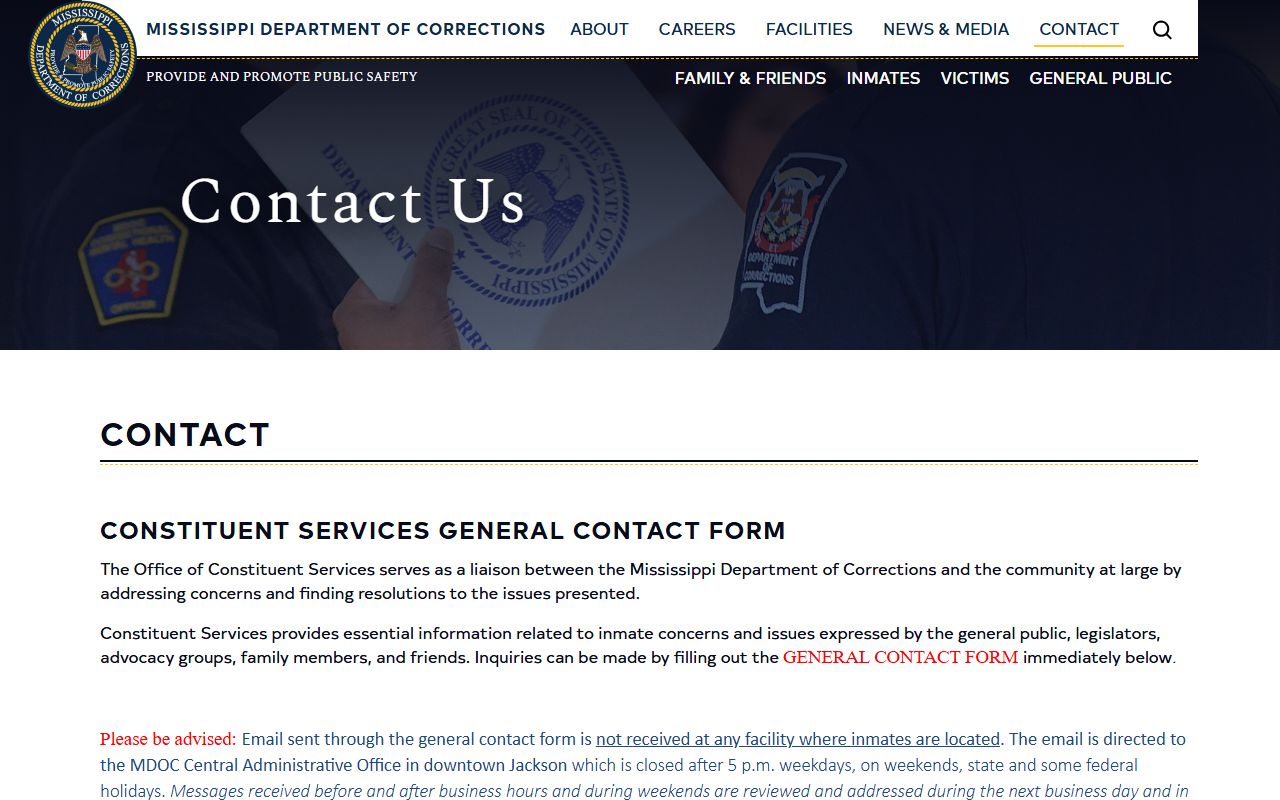
MDOC picks up where the county charge record ends, tracking a person after a charge becomes a conviction and a state sentence. A second statewide tool, the Mississippi sex offender registry run by the Department of Public Safety, lets the public search by name or location after acknowledging its disclaimer. The registry exists for public safety, and Miss. Code Ann. Section 45-33-21 bars misuse of its data.
Background Check Considerations
There is a real difference between a casual record lookup and a formal background check. A casual search of a charge index can tell you what was filed, but it can miss amendments, dismissals, sealed orders, and the final disposition. Mississippi opens most court records under the Public Records Act, Miss. Code Ann. Section 25-61-1, yet that openness does not make every use legal. Checks used for hiring, housing, credit, or insurance are governed by the federal Fair Credit Reporting Act and must run through a compliant provider.
Important: This site is not a consumer reporting agency under the FCRA, and its information may not be used for credit, employment, tenant, or insurance decisions.
Restricted Charge Records in Oktibbeha County
Not every charge record is open. Juvenile charges handled in Youth Court are confidential under Mississippi law, with access limited to authorized people such as guardians, attorneys, and court staff. Charges tied to sealed or expunged cases drop out of the public index by court order. Some dismissed counts and matters still under active investigation may be withheld as well, and files can redact Social Security numbers, financial accounts, medical details, and the names of minors.
When a record is restricted or simply not online, the access path is the clerk that owns it. The Circuit Clerk holds felony charge files, the Justice Court Clerk and Starkville Municipal Court hold lower-level matters, and the county public records request form covers records no portal shows. A written denial must cite the specific exemption it relies on, so an applicant always learns why a record is closed.