
Criminal Court Records in Oktibbeha County
A criminal court record is the official case file a court keeps once charges are filed against a defendant. It is not an arrest blotter and not a jail roster. It is the running account of a prosecution: the charging document, the entry of a plea, the motions filed by each side, the hearing dates, and the judge's final ruling. In Oktibbeha County, the clerk of the court that hears the case builds and stores this file. For felonies, that is the Circuit Clerk; for lower offenses, it is the Justice Court Clerk or the Starkville Municipal Court. The file stays with the court even after the case closes.
Which court holds the record depends on the level of the offense. Felony prosecutions move through the Circuit Court, the general law court that handles serious crimes, jury trials, and appeals from the lower courts. Oktibbeha County sits in Mississippi's 16th Circuit Court District alongside Lowndes, Clay, and Noxubee Counties. Misdemeanors and traffic offenses are handled at the local level. The Oktibbeha County Justice Court hears county misdemeanor and traffic matters, while the Starkville Municipal Court handles offenses that arise inside city limits and conducts preliminary hearings for felonies. The County Prosecutor represents the county in Justice Court, Drug Court, and Youth Court matters.
The county outlines these prosecution duties on its County Prosecutor page, which sets the local-court side of the criminal system.
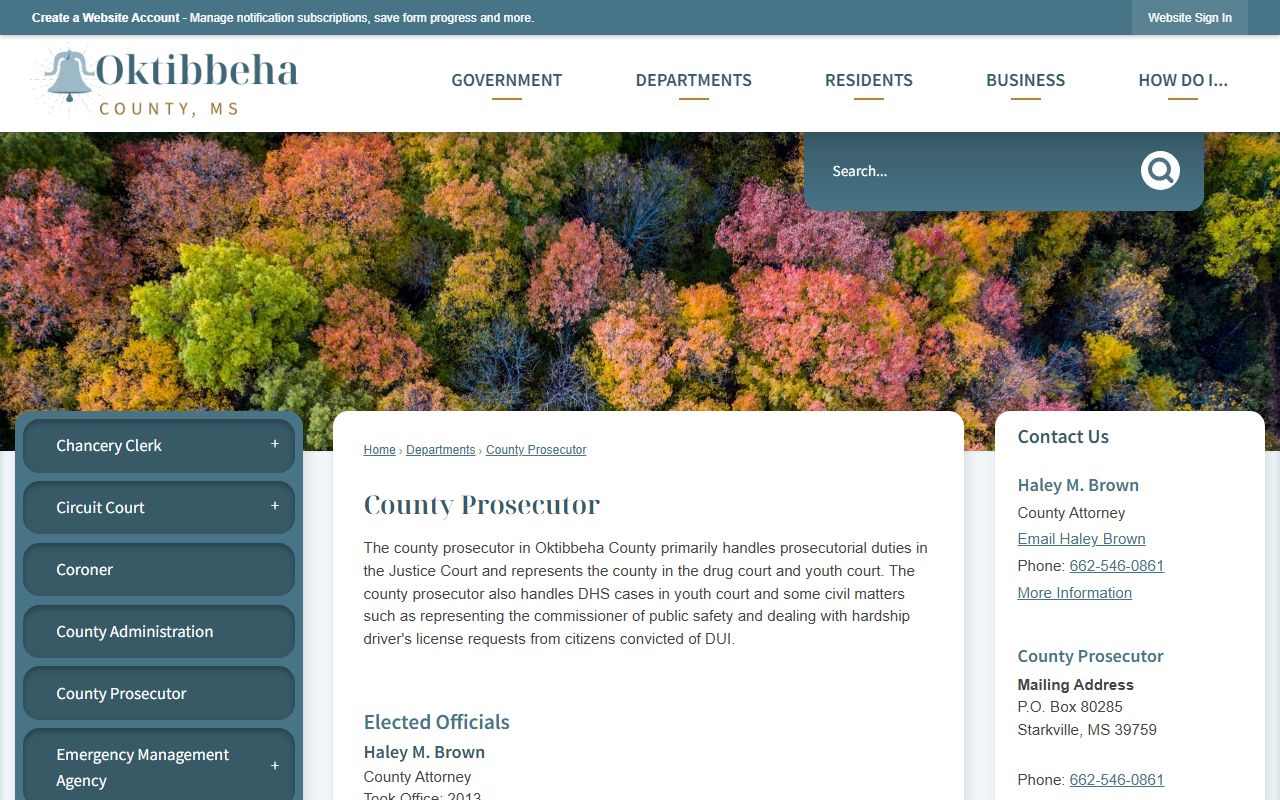
County Prosecutor Haley Brown handles the lower-court criminal docket, so misdemeanor case files you are looking for often trace back to that office and the Justice Court clerk rather than the Circuit Clerk.
How to Search Oktibbeha County Criminal Court Records
Circuit Court felony cases are searchable through the Delta Computer Systems portal that the county links from its Circuit Court page. The criminal index covers cases from 1997 to the present. The search screen is public, but full case detail is gated behind a paid account. The county warns that Circuit Court information costs $30 per month or $330 per year, and a user account and subscription are required to open documents.
The criminal portal is the right starting point when you know the defendant and want the Circuit Court file. You can preview the search fields before paying.
The Delta criminal court case search exposes its fields to any visitor even before login.
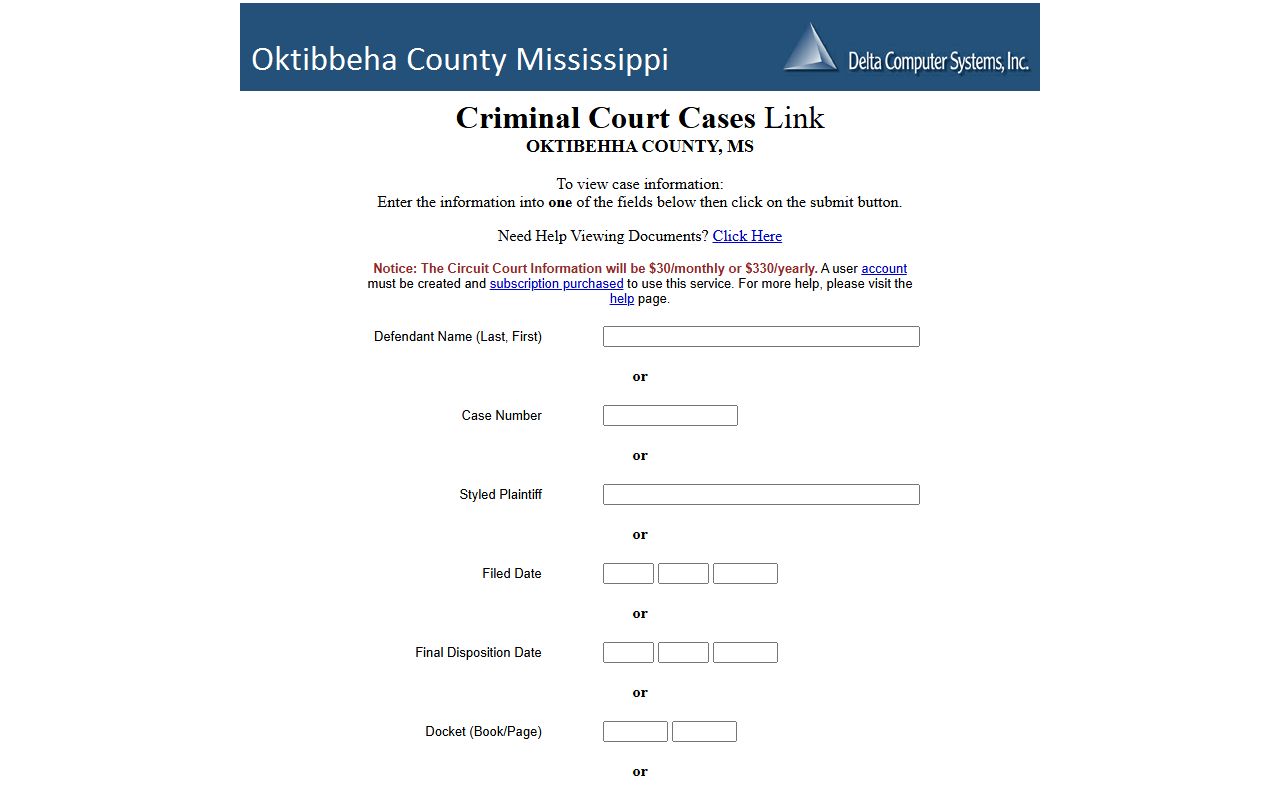
That screen lets you search by defendant name in last, first order, by case number, by styled plaintiff, by filing date, by final disposition date, by docket book and page, or by file number, with optional date-range and case-type refinements.
- Open the Delta criminal court case search linked from the county Circuit Court page.
- Enter the defendant name in last, first format, or type a known case number.
- Use the refinement options to narrow by case type and filing date range.
- Open the matching case to read the docket, the charges, and the disposition once you have an account.
- Request a certified copy from the Circuit Clerk if you need an official version for legal use.
Misdemeanor files are not in the Delta circuit portal. For Justice Court matters, contact the Justice Court Clerk at 104 Felix Long Drive, criminal line 662-324-3040 or 662-324-3032. For city cases, contact the Starkville Municipal Court at 110 West Main Street. For a statewide view of people serving felony sentences, the Mississippi Department of Corrections runs an inmate search, though that covers state custody rather than the full county court file.
Who Prosecutes Criminal Cases
Two prosecutors drive the criminal docket in Oktibbeha County, and the split mirrors the court split. Felonies are prosecuted by the 16th District Attorney, whose office covers Lowndes, Oktibbeha, Clay, and Noxubee Counties. The District Attorney decides what felony charges to bring before the grand jury, carries cases through the Circuit Court, and runs diversion paths that can change how a case ends. The District Attorney also operates a pretrial diversion track for first-time nonviolent offenders.
The 16th District Attorney's office publishes its role, victim resources, and program links for the district.
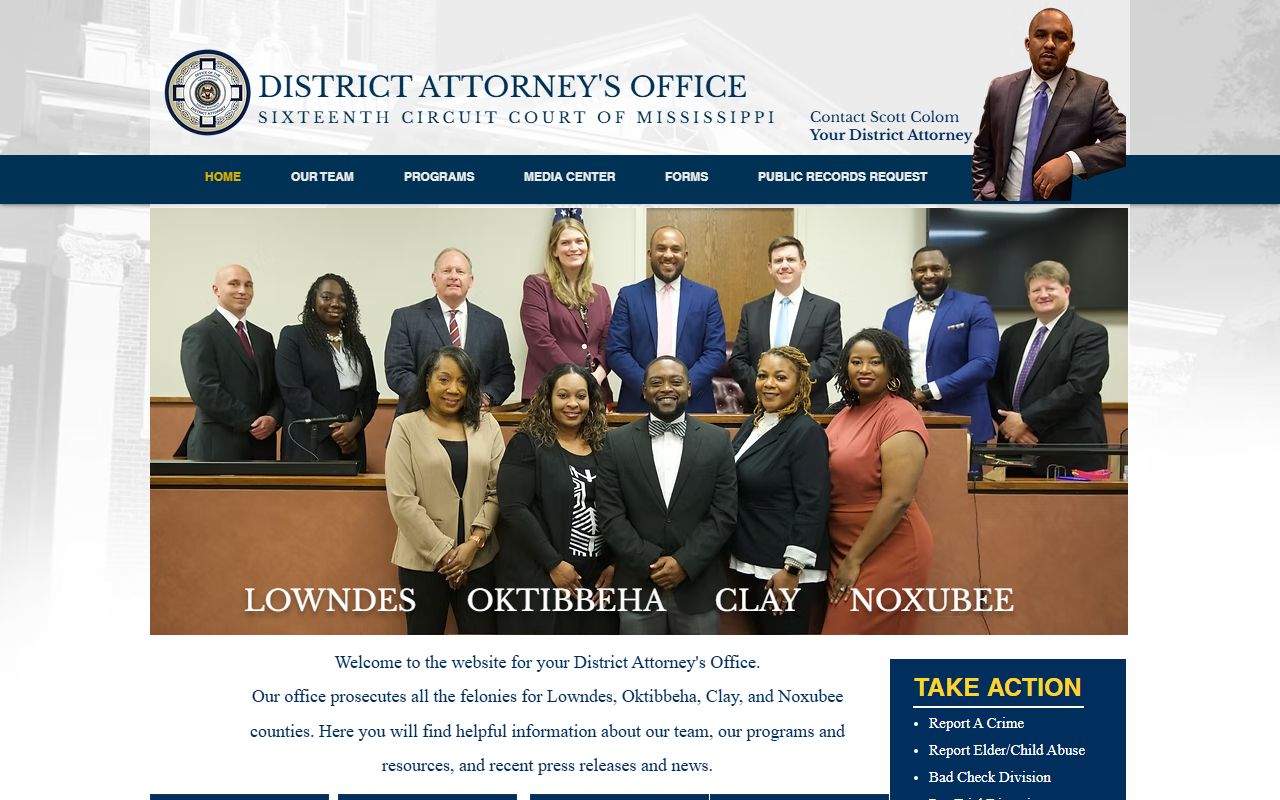
Because the prosecutor controls charging and diversion, those decisions show up directly in the criminal court record as amended charges, dismissals, or diversion entries. A felony that ends in diversion reads very differently from one that ends in a conviction.
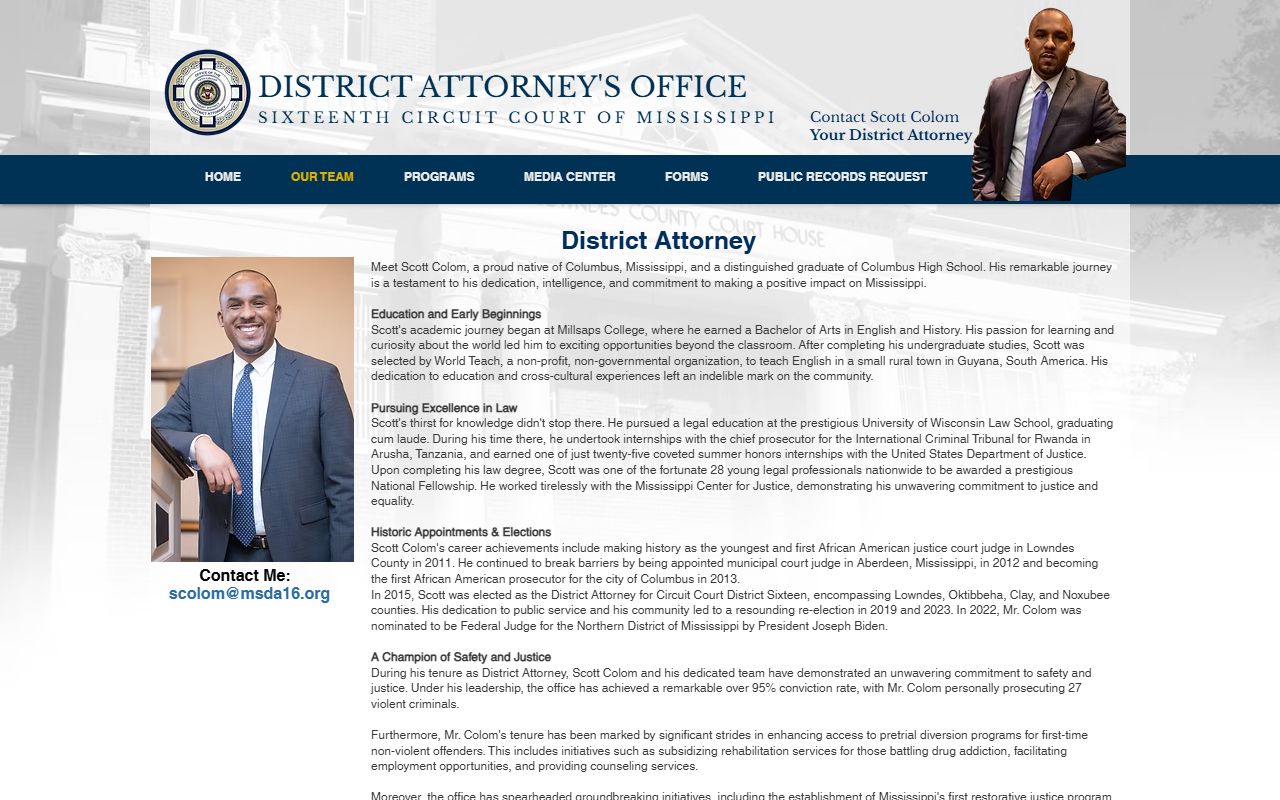
District Attorney Scott Colom leads that office. His program notes describe expanded pretrial diversion for first-time nonviolent offenders, including rehabilitation services for people battling drug addiction, employment help, and counseling.
The District Attorney profile for Scott Colom lays out those priorities.
For the closer look at the charges themselves and how they are filed, amended, or dropped, the Oktibbeha County arrest records and court charges page tracks the charging side of a case.
Stages of a Criminal Case
A criminal case moves through a fixed set of stages, and each stage leaves its own mark in the court file. Reading a record well means knowing where each step lands. A felony begins when charges are filed, often by indictment after the grand jury reviews the matter; the Oktibbeha County grand jury meets twice a year unless recalled by special order. From there the case advances to arraignment, pretrial work, a plea or trial, the disposition, and finally sentencing if there is a conviction.
Case flow: Charges Filed › Arraignment › Pretrial / Motions › Plea or Trial › Disposition › Sentencing
| Stage | What Happens |
|---|---|
| Arraignment | The defendant is formally advised of the charges and enters a plea of guilty or not guilty. The plea is logged in the file. |
| Pretrial / Motions | Each side files motions, exchanges evidence, and may negotiate. Motion days and special sessions are set by the circuit judge. |
| Plea or Trial | The case resolves by plea agreement or proceeds to a bench or jury trial in Circuit Court, where a verdict is reached. |
| Sentencing | After a conviction or guilty plea, the judge imposes the sentence, which the record stores as the final disposition detail. |
Circuit Court meets in Oktibbeha County four times a year by statute: the fourth Monday in January, the third Monday in April, the fourth Monday in July, and the third Monday in October. Those terms shape when felony hearings appear on the docket. Lower-court misdemeanor cases move on the Justice Court and Municipal Court schedules instead.
What an Oktibbeha County Criminal Court Record Shows
A criminal case file is built from index points and documents. The public Delta search screens reveal the index fields the Circuit Court uses even when the underlying documents are gated. A complete file ties those fields to the pleadings, orders, and docket events filed over the life of the case. The fields below are the ones you will most often use to read or identify a record.
| Field | What It Shows |
|---|---|
| Case Number | The unique number the clerk assigns the case; the fastest way to pull the exact file. |
| Defendant | The person charged, listed in last, first order in the criminal index. |
| Styled Plaintiff | The prosecuting party, typically the State of Mississippi in a criminal matter. |
| Charges | The offenses as filed, including their level and any later amendments or reductions. |
| Filing Date | When the case opened, which fixes its place on the docket and term. |
| Plea | The defendant's formal response, such as guilty, not guilty, or no contest. |
| Disposition | The outcome of each charge: convicted, acquitted, dismissed, or otherwise resolved. |
| Sentence | The punishment imposed on conviction, including jail, fines, probation, or supervision. |
For the broader set of county filings beyond criminal cases, the Oktibbeha County court records overview maps every record type and the office that keeps it.
Note: The public criminal search screen exposes these index fields, but reading the full charging documents and orders requires a paid Circuit Court subscription.
Charges vs. Convictions
A charge is an accusation, not a finding of guilt. Many criminal court records show charges that were later dropped, dismissed, reduced, or that ended in acquittal at trial. A conviction is the legal finding of guilt, reached by a jury or judge verdict or by a guilty plea. The difference matters because a file can carry a serious-sounding charge that never became a conviction. Always read a record to the disposition before drawing a conclusion about its outcome.
| Charge | Conviction | |
|---|---|---|
| Stage | Accusation at filing | Verdict or plea |
| Burden of Proof | Probable cause | Beyond reasonable doubt |
| Can Be Dropped | Yes, by dismissal or nolle prosequi | Stands unless appealed or set aside |
| Public Record | Yes | Yes |
A charge can also change as a case develops. Prosecutors may amend a charge up or down, drop counts, or enter a nolle prosequi to stop pursuing a charge. Each of those moves is logged in the file, so the charge listed at filing is not always the charge that reached disposition.
Reading Dispositions and Sentences
The disposition is the line that tells you how a charge ended. Common entries include guilty, not guilty, dismissed, and no contest, also called nolo contendere. A dismissal means the charge was dropped and did not result in a conviction. A nolle prosequi entry means the prosecutor chose not to proceed. Diversion or nonadjudication can hold a case open while the defendant completes conditions, after which the charge may be dismissed.
The sentence follows a conviction and sets the punishment. In a Circuit Court felony file, a sentence can include a term of incarceration, a fine, court costs, restitution, probation, or post-release supervision. A misdemeanor sentence in Justice or Municipal Court may carry a smaller fine, jail time, or a payment plan. The record stores the sentence next to the disposition for each charge.
Booking status is a separate question from the court outcome. A jail roster shows who is currently held, not who was convicted. For current custody, the Oktibbeha County inmate records page covers the sheriff's roster, which is a custody lookup rather than a conviction record.
Sealed vs. Expunged Records
Some criminal records are removed from public reach by court order. Sealing hides a record from ordinary public access while keeping it in existence. Expungement goes further and can restore a person to the legal status they held before the arrest or conviction for the expunged matter, subject to statutory limits. Mississippi makes some misdemeanors and a limited set of felonies eligible, but violent crimes, certain DUI offenses, and sex-offense matters are commonly excluded.
| Sealed | Expunged | |
|---|---|---|
| Visibility | Hidden from public search | Removed; treated as if it never occurred |
| Law Enforcement | Limited access remains | Very limited; restored prior status |
| Eligibility | Set by court order and statute | Eligible misdemeanors and limited felonies under Miss. Code § 99-19-71 |
The court that handled the case is the starting point for expungement. A Circuit Court felony generally returns to Circuit Court, while a Justice or Municipal Court misdemeanor returns to the court of conviction. A petitioner should obtain certified case dispositions from the clerk first and verify eligibility under current Mississippi law before filing, since granted orders do not always clear online records instantly.
Public Access to Criminal Court Records
Adult criminal case files in Oktibbeha County are public unless a statute or court order restricts them. The Mississippi Public Records Act sets the default of openness for records held by public bodies. When no portal covers a record, the county public records request form and the clerk counter are the fallback. Expungement and youth-court rules carve out the main exceptions. The state also keeps a public sex offender registry that is separate from any court case file.
The Mississippi Department of Public Safety runs that sex offender registry with name and geographic search after a disclaimer.
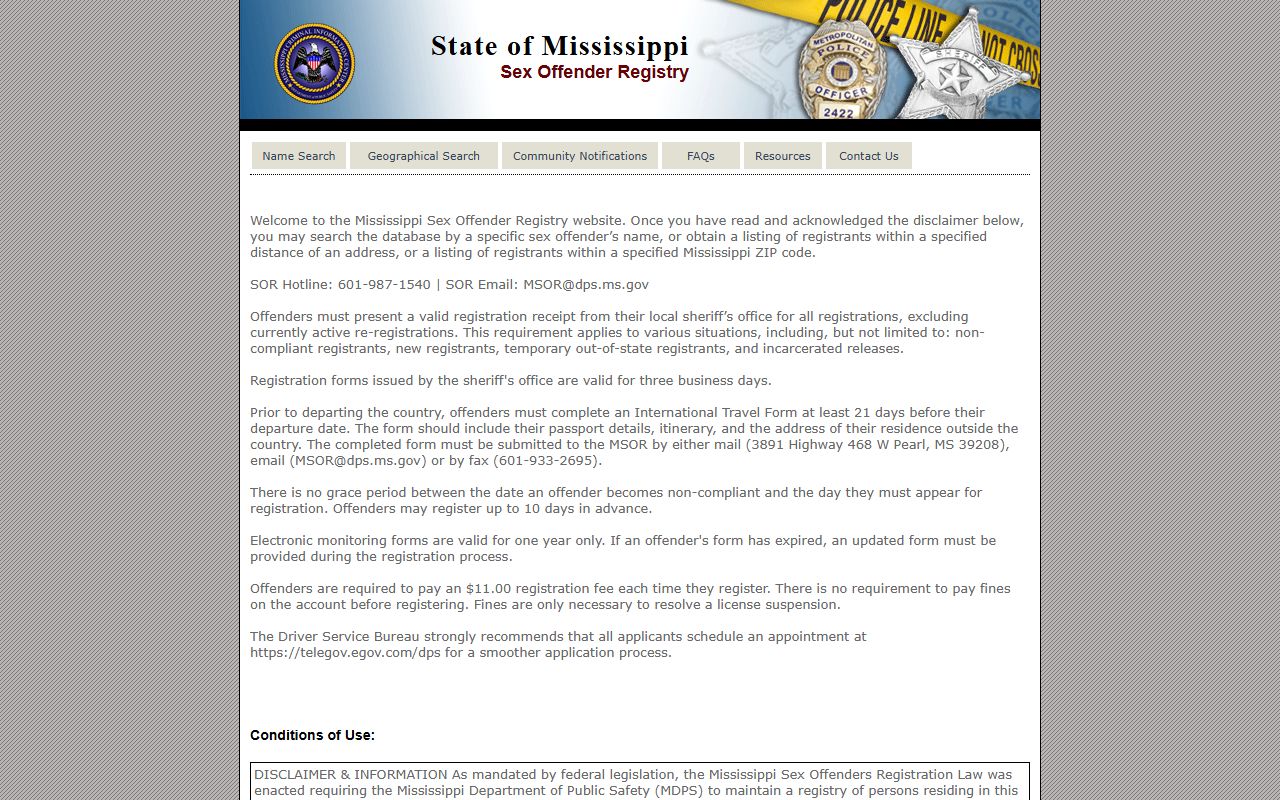
The registry is a public-safety tool, not a court record, and the law bars misuse, false reports, and commercial exploitation of its data.
Key Statutes:
Mississippi Code § 25-61-1 et seq. - the Public Records Act makes public records open unless a specific exemption applies.
Mississippi Code § 25-61-9 - record denials must be in writing and state the specific exemption relied on.
Mississippi Code § 99-19-71 - eligible misdemeanor, felony, and nonconviction records may be expunged by court order.
Background Check Considerations
A casual criminal-record lookup and a formal background check are not the same thing. Pulling a case file from a clerk or a court portal tells you what one court holds for one defendant. A background check used for hiring, housing, or credit is regulated by the federal Fair Credit Reporting Act and must come from a compliant consumer reporting agency. Court portals and public registries are not background-check services, and a single county file rarely reflects a person's full history across other counties or states.
Important: This website is not a consumer reporting agency under the FCRA, and its information may not be used for employment, tenant, credit, or insurance decisions.
Restricted Criminal Court Records in Oktibbeha County
Not every criminal matter is open to the public. Youth Court records involving children are confidential under Mississippi law and the Uniform Rules of Youth Court Practice. Disclosure is limited to authorized persons such as court staff, guardians, attorneys, and others allowed by statute or court order. Miss. Code § 43-21-261 governs that confidentiality, and the local Youth Court connects to county and Chancery Court resources.
Sealed and expunged cases also fall outside ordinary public search, and ongoing investigations or pending matters may be withheld until a charge is filed. Courts can redact personal identifiers such as Social Security numbers, financial account numbers, medical details, and the names of minors even within an otherwise public file. When a record does not appear in a portal, the surest path is to contact the clerk of the court that handled the case and, if needed, file a county public records request, keeping in mind that restricted categories may still require court authorization.